
John Dewey's Three C's
Consequences + Communication + Commonality = Community

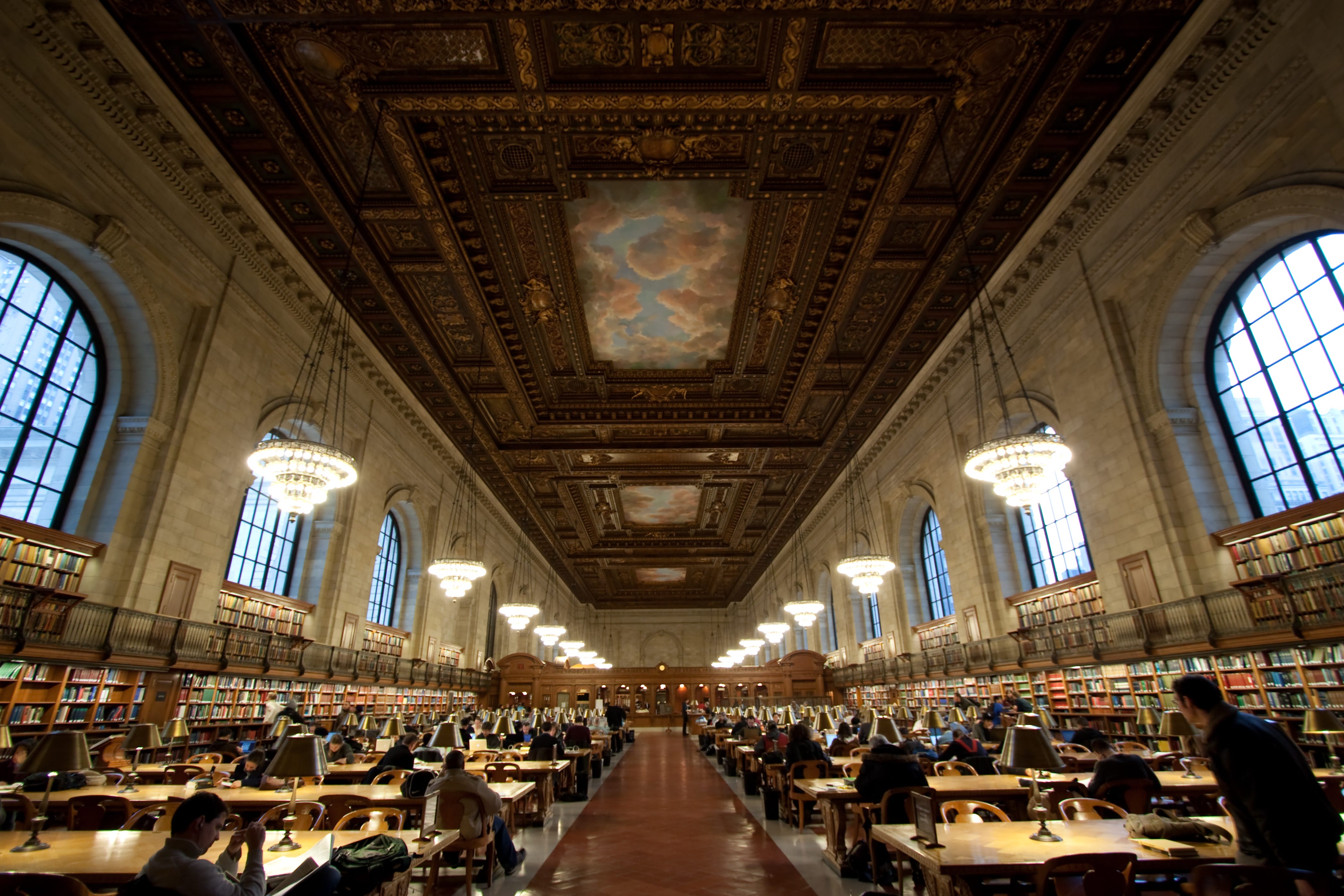
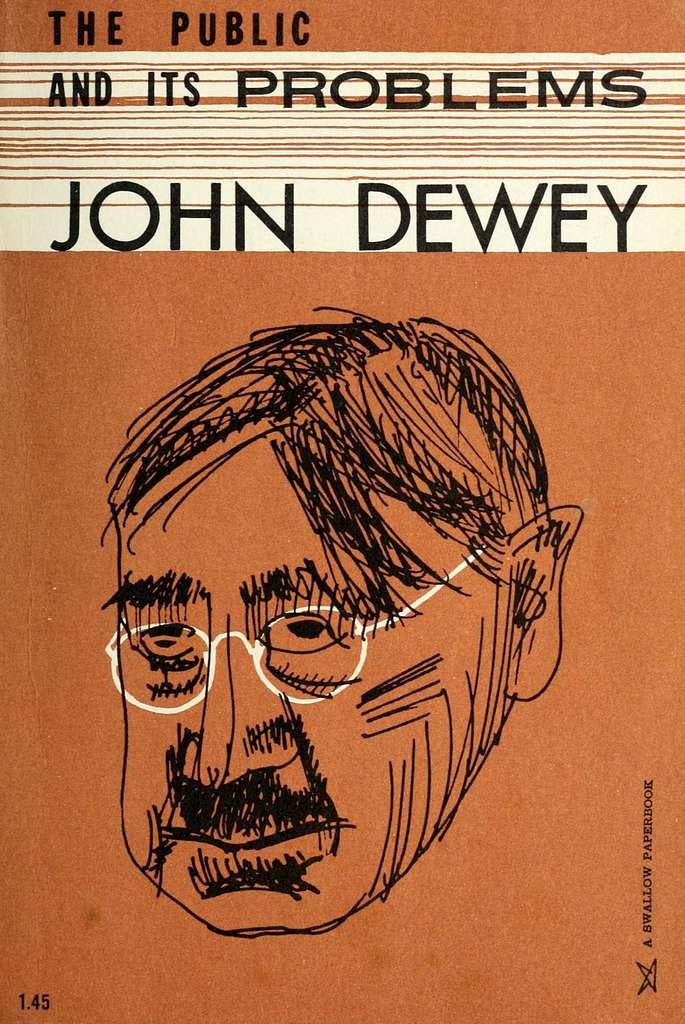
Reading John Dewey’s The Public and Its Problems as a young grad student, my heart pounding and my pen scribbling YES YES YES in the margins, I felt like I’d uncovered a map to a better world. Urbanism, public space, social democracy—all my scattered passions coalesced into a vision of a shared life, one where community wasn’t just a possibility but a necessity. Breathlessly devouring the book in one sitting, I left the NYPL’s Main Reading Room with the course of my intellectual life firmly set.
Ah, youth. Today I’m, for better or worse, much less of a Deweyite. The corrosive wisdom of Foucault, Marx, and Weber has made me less trusting in people’s ability to discover and pursue common ends. The rise of digital echo chambers and institutional decay hasn’t helped either.
Nonetheless, I still find Dewey’s work useful in the same way I still find Whitman inspiring: as a body of ideals to be approximated, not as blueprints to be applied. Taken with a grain of salt, Dewey’s ideas remain indispensable for understanding, critiquing, and mending every aspect of our fractured world. They need to be part of our toolkit: applied, tested, and modified as needed, but never thrown away.
With all that in mind, I want to lay out the major elements of John Dewey’s theory of community as set forth in The Public and Its Problems and explore why they still matter today.
The Lowdown on Dewey’s Community
Dewey’s framework is summarized by a great quote of his: that there is "more than a verbal tie between the words common, community, and communication.” In essence, community is accomplished via communication of commonalities. Got it?
Okay, there’s more to it. Individuals hold any number of things in common—sports, geography, favorite TV series, shared struggles. But we won’t know we hold these things in common if we aren’t communicating with other people. Communication can take multiple forms, from artwork to op-eds to conversations in public spaces. The point is that communication has to happen for community to take place.
But there’s a special kind of community that Dewey is particularly concerned with. That’s the community of people who are drawn together not because they share intrinsic interests but because they are affected by similar things. These are what Dewey calls “publics”: communities formed as the consequence of social activity.
Most of political life, for Dewey, consists of identifying and managing these public consequences, which can range from noise pollution to air pollution to poverty. Doing this requires us to be in communication about our experiences, reflecting on what social consequences we wish to embrace and which we wish to avoid. To do this well is to achieve a truly “social” democracy.
Dewey’s Vision Today
Take the climate crisis: a textbook example of Dewey’s “publics,” where people are united not by shared interests but by shared consequences. Yet, the public discourse on climate change is fragmented by political polarization, misinformation, and entrenched economic interests. What would it take to turn this fractured public into a cohesive community capable of meaningful action?
It won’t be easy. Dewey’s vision assumes a level of rational deliberation that our polarized, media-saturated world struggles to achieve. Our ability to identify commonalities depends on how inclusive our communication is and on the limits of the mediums we use (tweets vs. in-depth conversations). Our ability to alter social consequences depends on our power in the face of entrenched interests, systemic inequality, and institutional blockages. And that isn’t counting a more troubling, anti-humanist possibility: that our ability to collectively reason is constrained by biases and schemas we can barely recognize, much less undo.
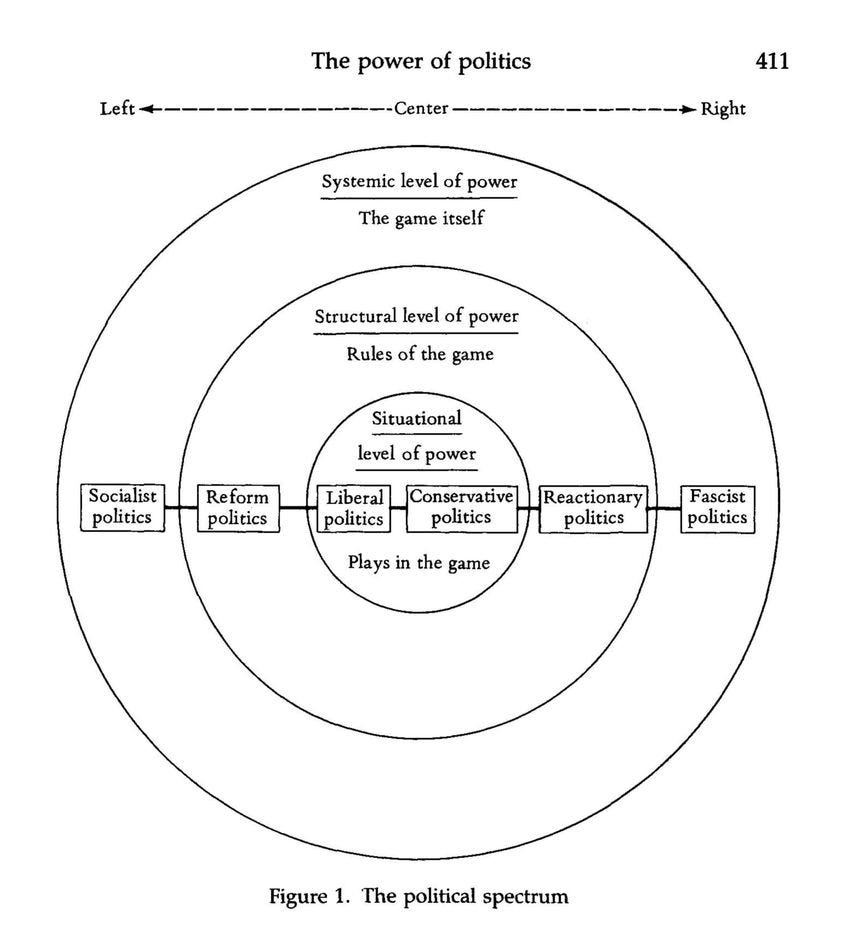
Still, I have faith. I believe in the possibility that public life can be more than zero-sum power politics or the amplification of bias. Accomplishing this will require a level of hard-nosed analysis and strategy that often goes beyond what Dewey-eyed liberals have to offer. But that’s getting ahead of ourselves.
Looking Ahead
There’s so much more to get into here: the role of public space and urban design in creating platforms for public formation. The importance of local economic democracy in fostering public spheres. The way different artforms can convey or distort shared experiences.
I’ll explore all of this on my Substack in the coming weeks. But for now, I’ll leave you with what remains of my old faith: that Dewey’s trifecta of consequences, communication, and commonality remains the most powerful framework for understanding community and its contortions today. And that’s why I wanted to start our journey with him—before proceeding to challenge and apply his ideas in our world, as he would surely have wanted.
Let’s talk: What are the public consequences you see in your own life? How do we begin to turn fractured publics into cohesive communities? Share your thoughts below or join the conversation in our next post.
Very well articulated - thank you